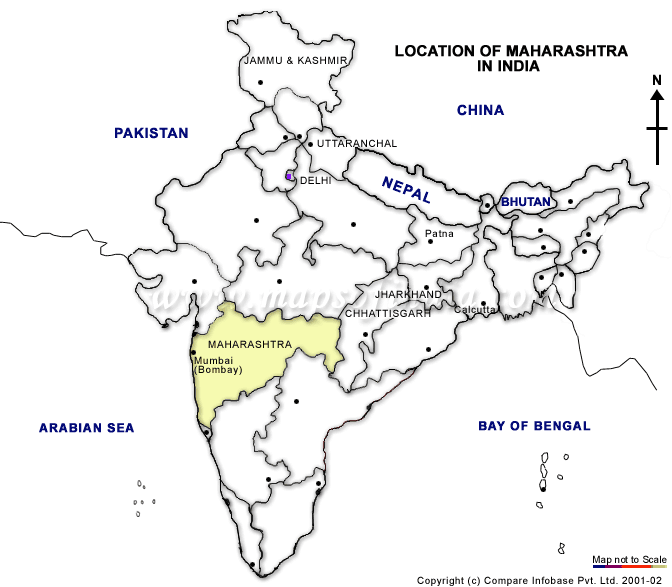
In the wake of the flooding in the state of Maharashtra, where the city of Mumbai is located, the state government banned the use and sale of plastic bags. The ban would be enforced by fining business owners 5,000Rs for ignoring the offense and individuals 1,000Rs.
During the July floods, plastic bags blocked water drains and exacerbated flooding which resulted in over a thousand deaths. The use of plastic in India is prolific. Unlike some places though, there aren't efficient ways to get rid of the bags, so you find plastic littering landscapes, roadways, and railways. According to an article in the Business Standard, Mumbai produces 7,800 tons of garbage daily - 40 of that is plastic. Considering the light weight of plastic, compared to say, a rotten potato, this is a large percentage of trash.
Can Anyone Not Use Plastic Bags? Anyone?
When we visited an environmental group focused on teaching kids to respect and appreciate the environment, we noticed they wrapped their teaching aids - educational cards - in plastic ziplock bags. Although ziplock bags aren't exactly the same as the micro-thin t-shirt bags, we thought it somewhat ironic. You notice that you're wading through plastic waste. When we asked the organization about their use of the bags, they explained that "we tell them to reuse the bags". Plastic bags are undeniably handy and cheap for everyone --even environmental agencies surrounded by discarded plastic, and that's the challenge.
Maharashtra is not the first state to ban plastic bags. Himachal Pradesh, Sikkim, Goa, Kerala and Karnataka have restrictions on plastic bag use. Nor is this the first time the ban has been attempted by this state. In 1998 the state tried to ban plastic bags after severe floods but the plastics industry lobbied successfully against the ban.
Although environmentalists applaud the action, the attempt is being met with resolute annoyance from some business quarters as well as the plastics industry. The Business Standard writes that the ban will negatively effect the lucrative state plastic bag industry (Rs 1000 is a crore). They warn that hundreds of thousands of people will be jobless as a result. So, according to Mid-Day Mumbai, The All India Manufacturers' Association (AIPMA) has decided to petition the high court against the Brihanmumbai Municipal Corporation and the Maharashtra government. Retail workers oppose the ban.
Not On Our Watch -- Industry Strikes Back
Other countries have successfully reduced plastic by imposing fines. Ireland put into effect a '"plus tax," a levy of about 20 cents that retail customers have had to pay for each plastic bag since March 2002"'. South Africa (where they were referred to as the "national flower") Kenya, Bangladesh and Bhutan are some of the countries that have taken action to reduce the prevalence plastic bag. As well, according to an article on the subject, "In Australia about 90 percent of retailers have signed up with the government's voluntary program to reduce plastic bag use.". The US has not made a national effort to ban plastic bags, in fact some stores prefer that you use them because they're cheaper. The fines may be a start to reduce the insidious use of plastic bags, but will it counter the convenience of the bags?
When measures to reduce plastic bag use are imposed, manufacturing interests in the United States, such as the American Plastic Council and the Film and Bag Federation urge recycling programs instead. The plastic industry's response sounds remarkably similar to the gun lobby's response when challenged about murder rates and gun ownership (guns don't kill people, people do). As reported by the Seattle Post Intelligencer Rob Krebs, a spokesman for the American Plastics Council, said "Every piece of litter has a human face behind it. If they are a harm to the environment in terms of visual blight, then people need to stop littering."
This organization's site has a plastic bag counter and some other miscellaneous information about the use of plastic bags.
-------------------------------------------------
April 21, 2006: A reader writes to point out the the article said Australia had "banned" plastic bags, this is incorrect. Thanks for pointing out the miswording! We corrected it.